
Daily Worksite Safety Inspection Checklist for Construction Sites in Australia
Every day on a construction site is different, but the risks are remarkably consistent. A clear, repeatable daily checklist is one of the most powerful tools for keeping workers safe and keeping managers compliant with Australian WHS legislation.
Whether you're running a residential build in Brisbane, a commercial fitout in Melbourne, or a civil infrastructure project in regional Western Australia, job site safety must be approached with the same rigour every single morning. That starts before the first boot hits the ground.
This guide provides a practical, comprehensive construction site safety checklist designed for daily use by both workers and managers. It covers everything from site access and PPE to electrical hazards and end-of-day lockdown procedures, all in accordance with Australian standards and SafeWork Australia guidelines.
What Is a Daily Worksite Safety Inspection Checklist?
A daily worksite safety inspection checklist is a structured document used to inspect a construction site before, during or after work activities. It helps site managers, supervisors, safety officers and workers identify hazards, confirm control measures are in place and record any corrective actions required.
A good checklist should cover common construction site risks, including:
- Site access and perimeter security
- Housekeeping and trip hazards
- PPE compliance
- Electrical safety
- Working at heights
- Mobile plant and vehicles
- Excavation safety
- Hazardous substances
- Emergency procedures
- End-of-day site lockdown
Using a checklist every day helps ensure safety is not left to memory or informal observation.
Why Daily Worksite Safety Inspections Are Important
The statistics are sobering. According to Safe Work Australia, the construction industry consistently records one of the highest rates of workplace fatalities and serious injuries of any sector in the country. In 2023–24, falls from height, being hit by moving objects, and electrocution remained the leading causes of death on Australian construction sites.
The common thread in most incidents? Skipped or rushed pre-start checks. A proper construction site safety inspection checklist doesn't just tick a compliance box; it forces a fresh, systematic scan of the environment before work begins, when hazards are most likely to be identified and corrected.
Construction sites are high-risk environments. Workers may be exposed to hazards such as:
- Reduce workplace incidents
- Improve hazard reporting
- Identify unsafe conditions early
- Support toolbox talks
- Improve communication
- Keep audit-ready records
- Encourage proactive risk control
- Strengthen WHS compliance
- Build a stronger safety culture
Importantly, a good checklist also creates a documented record. In the event of a WorkSafe investigation, having signed daily inspection records demonstrates your organisation's genuine commitment to construction safety protocols, which can make an enormous difference to legal liability outcomes.
Who Should Complete the Daily Worksite Safety Inspection?
A daily worksite safety inspection should be completed by a competent person who understands the site, the work being performed and the relevant safety controls.
This may include:
- Site manager
- Site supervisor
- Leading hand
- Safety officer
- Project manager
- Health and safety representative
- Competent subcontractor supervisor
On larger sites, different sections of the checklist may be completed by different people. For example, a licensed electrician may complete electrical safety checks, while a site supervisor checks access, housekeeping, worker readiness and plant movement.
The completed checklist should be signed, dated and stored in the site safety folder or digital WHS system.
Daily Worksite Safety Inspection Checklist for Construction Sites
Use the following checklist before work begins each day. It can be printed, laminated, digitised or adapted into your existing WHS system.
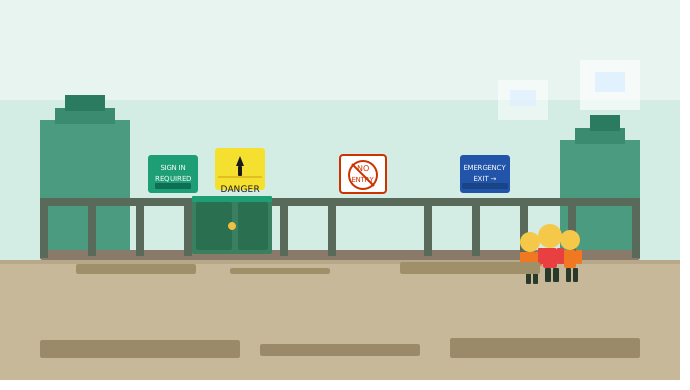
1. Site Access and Perimeter Safety Checklist
Before workers, subcontractors or visitors enter the construction site, check that access is controlled and the site boundary is secure.
Access Control:
✅ Site entry and exit points are secure
✅ Gates, locks and access controls are working
✅ Unauthorised access points are blocked
✅ Visitor sign-in process is available
✅ Perimeter fencing or hoarding is intact
Site Conditions:
✅ Site signage is visible and easy to read
✅ Emergency access routes are clear
✅ Delivery and loading zones are clearly marked
✅ Pedestrian routes separated from vehicle routes
✅ Site conditions are safe for all personnel
2. Morning Pre-Start Safety Inspection Checklist
The morning inspection is one of the most important parts of the daily safety process. It should identify any new hazards before tools, plant or equipment are used.
Site readiness:
✅ Walk-through completed before work begins
✅ New hazards from the previous day identified
✅ Changed work areas reviewed
✅ Weather conditions checked
✅ High-risk tasks for the day identified
Briefing & planning:
✅ Toolbox talk or pre-start meeting completed
✅ Workers briefed on tasks and hazards
✅ SWMS reviewed where required
Briefing & planning:
✅ Corrective actions from previous inspections followed up
✅ Safety register and induction records up to date
3. Housekeeping and General Worksite Conditions Checklist
Poor housekeeping is a common cause of slips, trips, falls and preventable site injuries. Every work area should be checked before work begins.
Cleanliness & Storage:
✅ Work areas are clean and free of unnecessary materials
✅ Waste bins available and not overflowing
✅ Materials stacked safely and securely
✅ Amenities are clean and accessible
Access & walkways:
✅ Walkways clear of debris, cords and waste
✅ Stairs, ramps and ladders clear
✅ Trip hazards removed or clearly marked
Hazard control:
✅ Sharp objects and protruding nails removed or controlled
✅ Wet or slippery areas controlled
✅ Lighting suitable for the work being performed

4. PPE and Worker Readiness Checklist
Personal protective equipment must be suitable for the task, correctly fitted and in good condition.
Head, Body & Feet:
✅ Hard hat worn correctly and undamaged
✅ High-visibility clothing suitable for site conditions
✅ Steel-capped boots worn and in good condition
✅ Gloves suitable for the task
Eyes, Ears & Lungs:
✅ Eye protection available and used where required
✅ Hearing protection available for high-noise work
✅ Respiratory protection available for dust or fumes
Hazard control:
✅ Fall-arrest harnesses inspected before use
✅ Workers fit for work and not visibly impaired
✅ Lighting suitable for the work being performed

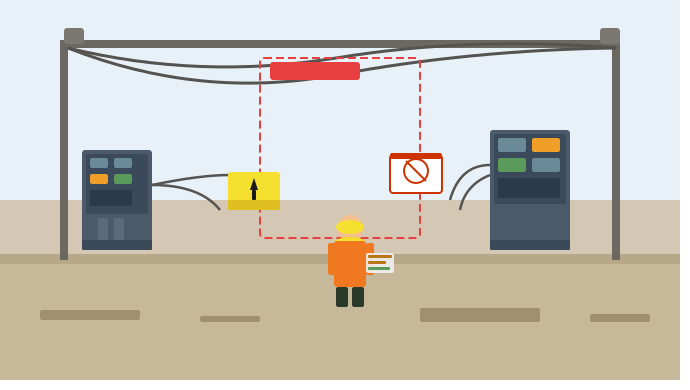
5. Electrical Safety Inspection Checklist
Electrical hazards must be checked daily, especially on sites using temporary power, portable tools, generators, extension leads and temporary switchboards.
Tools & Equipment:
✅ Power tools inspected before use
✅ Cords, plugs and casings free from damage
✅ Extension leads tested, tagged and within date
✅ Leads elevated or protected from mud and traffic
Switchboards & RCDs:
✅ RCDs installed and tested
✅ Temporary switchboards protected from damage and weather
✅ Electrical work only by licensed electricians
Powerlines & Underground:
✅ Overhead powerlines identified
✅ Exclusion zones around powerlines marked
✅ Underground services located before excavation
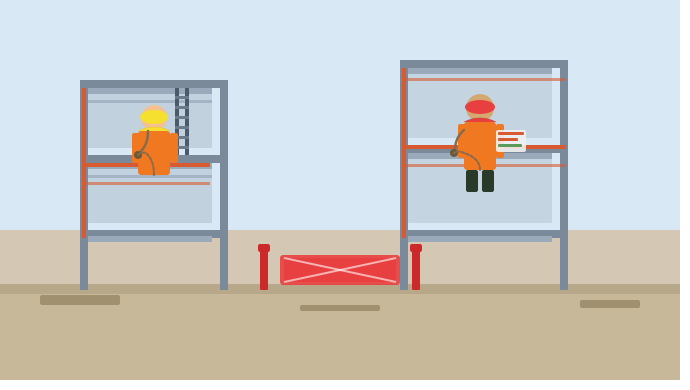
6. Working at Heights Inspection Checklist
Working at heights remains one of the most serious risks on construction sites. Any task involving ladders, scaffolds, roofs, voids, edges or elevated work platforms should be checked before work begins.
Scaffolding:
✅ Scaffolding inspected before use
✅ Scaffold tags current where required
✅ Guardrails, midrails and toe boards in place
✅ Scaffold platforms secure and clear of debris
Edge & Fall Protection:
✅ Ladders are suitable, stable and used correctly
✅ Edge protection installed where required
✅ Floor penetrations and voids covered or barricaded
✅ Harnesses, lanyards and anchor points inspected
Workers & Conditions:
✅ Workers trained for working at heights
✅ Weather conditions suitable for height-related work
7. Plant, Equipment and Vehicle Safety Checklist
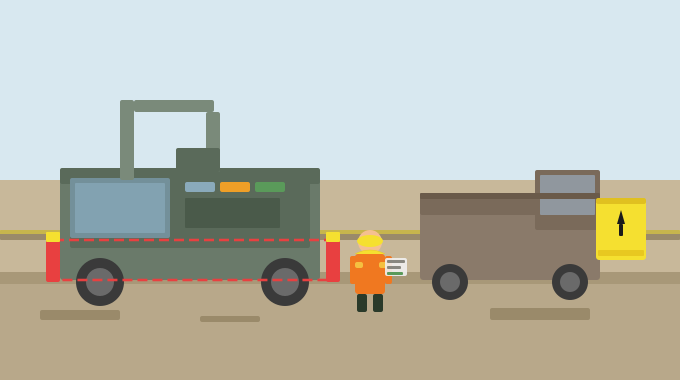
Mobile plant, machinery and site vehicles can create serious risks, especially where pedestrians and machinery operate in the same area.
Pre-start & Operator:
✅ Plant pre-start checks completed
✅ Logbooks updated
✅ Operators hold the required licence or competency
✅ Maintenance and registration records are current
Safety Systems:
✅ Reversing alarms, mirrors, lights and cameras working
✅ Seatbelts and safety guards are functional
✅ Loads secured and within rated capacity
Traffic & Exclusion Zones:
✅ Exclusion zones marked around the operating plant
✅ Spotters assigned where required
✅ Traffic management plan in place and understood
8. Excavation and Ground Conditions Checklist
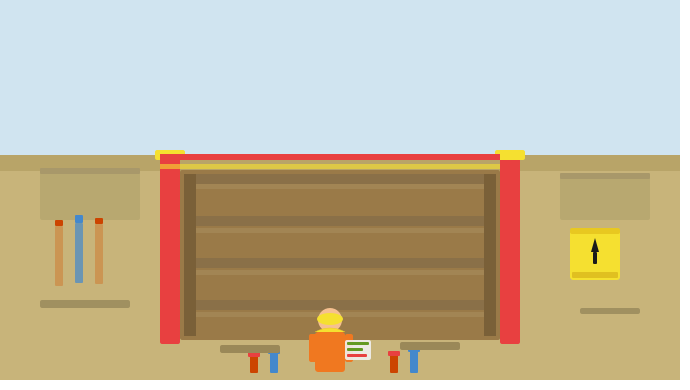
Excavations, trenches and ground openings must be checked daily, particularly after rain, vibration, heavy plant movement or changes in ground conditions.
Trench Stability:
✅ Excavations and trenches barricaded
✅ Ground conditions confirmed stable
✅ Shoring, benching or battering in place where required
✅ Edge protection installed where required
Services & Surroundings:
✅ Underground services identified before excavation
✅ Spoil piles kept away from excavation edges
✅ Plant kept clear of trench and excavation edges
Access & End of day:
✅ Safe access and egress available
✅ Workers briefed on collapse and engulfment risks
✅ Open excavations secured at the end of the day
9. Hazardous Substances and Environmental Controls Checklist
Hazardous substances must be stored, labelled and managed correctly to reduce health, fire and environmental risks.
Storage & Labelling:
✅ Safety Data Sheets (SDS) available
✅ Chemicals and fuels are correctly labelled
✅ Hazardous substances stored securely
✅ Spill kits available and stocked
Dust & Airborne Risks:
✅ Workers trained in spill response
✅ Dust controls in place where required
✅ Silica dust risks controlled
✅ Asbestos risks assessed where relevant
Waste & Environment:
✅ Waste separated and disposed of correctly
✅ Stormwater drains are protected from contamination

10. Emergency Preparedness Checklist
Every worker should know what to do in an emergency. Emergency arrangements should be checked regularly and explained to new workers, subcontractors and visitors.
Plans & First Aid:
✅ Emergency plan available on site
✅ Emergency contact numbers displayed
✅ First aid kit stocked and accessible
✅ First aid officer confirmed on site
Fire & Evacuation:
✅ Fire extinguishers available and in date
✅ Muster point clearly marked
✅ Emergency vehicle access is clear
Communication & Training:
✅ Site communication systems are working
✅ Workers know how to report incidents and near misses
✅ Emergency procedures reviewed with new workers

11. End-of-Day Worksite Safety Inspection Checklist
A final inspection should be completed before the construction site is closed for the day. This helps prevent after-hours incidents, unauthorised access, theft, fire and hazards for the next shift.
Personnel & sign-out:
✅ All workers and visitors signed out
✅ Site checked for remaining personnel
✅ Incidents, hazards and near misses recorded
Equipment & Power:
✅ Tools and equipment stored securely
✅ Plant parked in designated areas
✅ Keys removed and isolators engaged
✅ Temporary power isolated where safe
Site Security & Hazards:
✅ Excavations and openings covered or barricaded
✅ Hazardous substances locked away
✅ Waste and trip hazards cleared
✅ Site fencing, gates and lighting secure

Need a list to use on your site?
Download and use our Daily Worksite Safety Inspection Checklist. It’s a simple, professional PDF designed to help you cover all critical safety points, from electrical tags to height safety in minutes.
How to Use a Daily Worksite Safety Inspection Checklist Effectively
A checklist is only effective when it is completed properly and followed by action. To get the best results, construction teams should use the checklist consistently and adapt it to suit their site.
1. Make the Checklist Site-Specific
A generic checklist is a good starting point, but every construction site has different hazards. Review and adjust the checklist based on the project type, site layout, trades involved and high-risk construction work being performed.
2. Complete the Checklist Before Work Starts
The main inspection should be completed before workers begin their tasks. This allows hazards to be identified and corrected before anyone is exposed to unnecessary risk.
3. Record Corrective Actions
If an issue is found, record:
- The hazard
- The location
- The person responsible
- The corrective action required
- the completion date
- Sign off once the issue is resolved
4. Review Repeated Safety Issues
If the same hazard keeps appearing, the control measure may not be effective. Repeated issues should be reviewed by the site manager or safety officer.
5. Store Completed Checklists
Completed checklists should be stored in a site safety folder or digital WHS system. These records may be useful during audits, inspections, incident investigations or internal safety reviews.
Benefits of Using a Daily Worksite Safety Inspection Checklist
Using a daily checklist can help construction businesses improve safety performance and reduce preventable risks.
Key benefits include:
- better hazard identification
- improved worker communication
- stronger WHS documentation
- clearer supervisor accountability
- fewer overlooked site risks
- improved pre-start meetings
- better incident prevention
- easier safety audits
- stronger construction safety culture
Most importantly, it helps make safety part of the daily routine rather than an occasional administrative task.
Final Thoughts
A safe construction site is built through daily action. A daily worksite safety inspection checklist gives Australian construction teams a clear and repeatable process for identifying hazards, checking controls and documenting safety actions.
The checklist does not need to be complicated. It needs to be consistent. Inspect the site. Brief the workers. Fix the hazards. Record the actions. Repeat the process every day. That is how daily worksite safety becomes part of normal construction culture.
FAQs About Daily Worksite Safety Inspections
1. What is a daily worksite safety inspection checklist?
A daily worksite safety inspection checklist is a document used to inspect a construction site each day. It helps identify hazards, confirm safety controls and record corrective actions before work begins.
2. Who should complete a construction site safety inspection checklist?
The checklist should be completed by a competent person, such as a site manager, supervisor, safety officer, leading hand or nominated worker representative.
3. When should a worksite safety inspection be completed?
A daily safety inspection should usually be completed before work starts. Additional inspections may be required after severe weather, major deliveries, incidents, site changes or high-risk activities.
4. What should be included in a daily construction safety checklist?
A daily construction safety checklist should include site access, housekeeping, PPE, electrical safety, working at heights, plant and equipment, excavations, hazardous substances, emergency procedures and end-of-day site security.
5. Is a daily worksite safety inspection checklist required in Australia?
WHS laws require duty holders to manage risks so far as is reasonably practicable. While the exact checklist format may vary, daily documented inspections can help demonstrate that risks are being actively identified and controlled.